

Choosing what to put in a grave vase is one of those small decisions that carries a great deal of meaning. Whether you are visiting a churchyard for the first time since a bereavement or you tend a cemetery plot through every season, the right flowers, plants, and fillers can keep a memorial looking loved and well cared for, whatever the British weather throws at it.
A grave vase, sometimes called a cemetery vase, memorial flower holder, or headstone vase, is a container designed to hold flowers at a graveside. It gives cut stems a water source, keeps an arrangement upright in the wind, and makes a plot look tidy and visited.
In the UK, grave vases come in several forms. A grave spike (also known as a cone vase) pushes directly into the ground beside a headstone and suits informal arrangements. Headstone insert vases are set into a slot in flat or upright memorials and are often made from plastic or aluminium with a lid to reduce spillage. Freestanding grave pots sit independently and are ideal when there is no headstone in place yet. Materials range from polished granite and marble, both weather-resistant and long-lasting, to aluminium and recycled plastic, which are lighter and more affordable.
Before choosing what to place inside, it is worth checking the rules of your specific cemetery or churchyard. Policies across the UK vary significantly: some local authority cemeteries allow only fresh flowers, others permit silk or artificial arrangements year-round, and a small number restrict items to those supplied by the cemetery itself. When in doubt, a quick call to the cemetery office will save disappointment.
Fresh flowers remain the most common and most meaningful choice. The key is picking varieties that hold up outdoors and, where possible, choosing flowers that are in season. Locally grown, in-season stems last considerably longer than imported ones.
Chrysanthemums are consistently one of the best choices for a grave vase. Long-lasting even in cool outdoor conditions, they are available for most of the year and come in white memorial flower vases, yellow, purple, and deep red. In the UK, white chrysanthemums carry a quiet symbolism of honour and loyalty.
Carnations are another reliable option. They are robust, hold moisture well in floral foam, and come in colours that allow for personal meaning: white for remembrance, pink as a mark of gratitude.
Roses remain the most popular flower at cemeteries. Red roses express deep love and are frequently left by a spouse or partner; white roses signal purity and are common at children’s memorials. For a grave vase specifically, choose shorter-stemmed varieties or trim stems to fit securely.
Lavender is worth considering for a different kind of arrangement. Its fragrance is long-lasting, it tolerates dry spells better than many cut flowers, and it carries associations with peace and rest that make it fitting for a graveside.
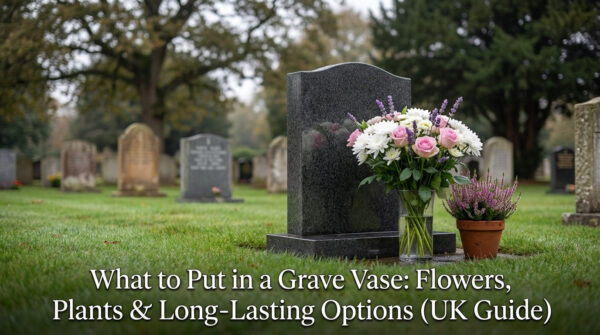
For the winter months, pansies, winter heather, and cyclamen are among the best performers. Heather can survive temperatures as low as -15°C and brings colour to a grave pot through the bleakest weeks. Snowdrops and hellebores (the latter also known as the Christmas Rose) are equally frost-hardy and add a quiet, dignified presence during the colder seasons.
To keep fresh cut flowers alive longer, always use well-soaked floral foam inside the vase rather than loose stems in water. An anti-transpirant spray applied before placing flowers at the graveside can noticeably extend their life, particularly during windy or frosty spells.
If you are not able to visit frequently, a potted plant placed on or beside the grave can be a better long-term option than cut flowers. Many cemeteries across the UK permit small pots, and a well-chosen plant may thrive through multiple seasons with minimal attention.
Heather works beautifully in a grave pot and essentially looks after itself. Polyanthus and miniature daffodil bulbs are cheerful additions for spring. For year-round structure, small evergreen shrubs, planted directly in the ground where cemetery rules allow, provide reliable coverage even through winter.
Bulbs are worth particular consideration. Planted in autumn, crocus, snowdrop, and miniature narcissus bulbs will return each year with almost no maintenance, offering seasonal colour at a site you may only be able to visit occasionally.
The main challenge with grave pots is water. Even in rainy UK weather, containers dry out quickly. If regular visits are not possible, watering-retentive compost or water-gel granules mixed into the soil can help.
High-quality silk flowers have improved enormously, and many people find that a well-made artificial arrangement in a grave mum-dad vase is a practical and dignified choice, particularly when regular maintenance is not realistic.
Artificial flowers designed specifically for outdoor cemetery use are UV-stabilised and will not fade or bleed colour onto stone. A quality silk arrangement can remain presentable for a year or more. They also stand up to the kind of gusty conditions that would strip a fresh bouquet in days.
The important caveats: always check whether your cemetery permits artificial flowers before purchasing, and choose arrangements marketed for outdoor or cemetery use rather than household decorative silk stems, which will deteriorate quickly in the elements.
For those who prefer fresh uncle white memorial flower vase on significant dates but want something permanent in between, a silk arrangement in the grave vase between visits strikes a practical balance.
One of the most frustrating experiences at a graveside is returning to find your arrangement blown over or scattered. The fix is straightforward. For a cone vase or spike, cut a piece of styrofoam or dry floral foam to fit snugly into the neck. This holds stems in place far more securely than water alone. Floral picks and floral tape can anchor individual stems, particularly taller ones that catch the wind.
For freestanding grave pots, add pebbles or a layer of sand to the base to lower the centre of gravity. If you are using a plastic insert inside a stone outer, fill the insert with water and secure stems into a floral foam cylinder. Never use a glass vase at a cemetery; most UK cemeteries prohibit glass specifically because of the risk of shattering.
| Season | Recommended for a Grave Vase |
| Spring | Daffodils, tulips, forget-me-nots, polyanthus |
| Summer | Roses, carnations, lavender, geraniums, begonias |
| Autumn | Chrysanthemums, sunflowers, marigolds, heather |
| Winter | Pansies, cyclamen, hellebores, snowdrops, winter heather |
UK cemeteries, whether run by a local authority, a church, or a private operator, each carry their own guidelines. Common restrictions include: no glass containers, no items that obstruct mowing, no permanent planting without permission, and seasonal removal of decorations following major holidays. Churchyards managed by a parish council often have stricter rules than municipal cemeteries.
The safest approach is always to contact the cemetery office before placing anything new on a plot. Groundskeepers will generally move rather than discard fresh flowers if they need access to a site, but items left over time may be cleared without notice.
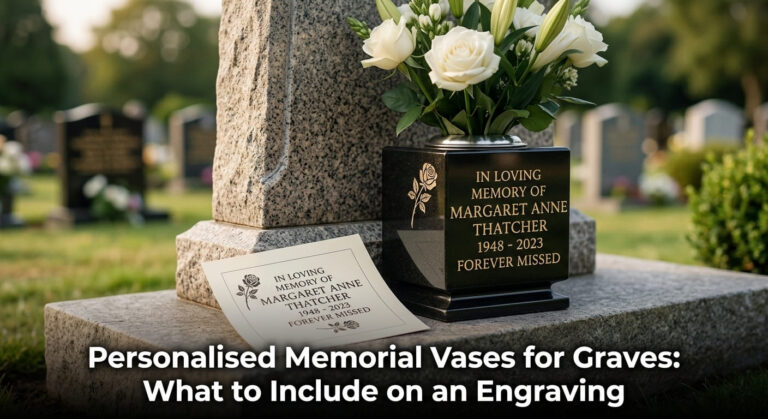
If you are looking for a durable grave vase to complement a headstone or kerb set, material choice matters. Granite grandparent vases are scratch-resistant, weather beautifully, and can be matched to an existing headstone for a coherent look. Aluminium grave vases are lighter and available with coloured lids. Plastic inserts are the most economical option and are manufactured in the UK using recycled materials, making them a practical everyday choice.
Some memorial suppliers offer grave vases with inscription panels, allowing a short personal message to be engraved directly onto the vase, a meaningful addition to a memorial that already carries the headstone’s wording.
At Signs and Memorials, you can find a range of cemetery vases suited to different headstone types, materials, and budgets. Choosing the right vase makes caring for the grave simpler and ensures your tributes remain secure through all seasons.
Chrysanthemums and carnations are the longest-lasting fresh flowers for a grave vase. Winter heather, pansies, and cyclamen are excellent for colder months. Using well-soaked floral foam inside the vase and applying an anti-transpirant spray significantly extends the life of any arrangement.
Many UK cemeteries permit artificial flowers in a grave vase, but policies vary. Always check with the cemetery or churchyard before placing silk or plastic flowers. Where allowed, choose UV-stabilised outdoor varieties, as standard craft-store silk flowers deteriorate quickly in outdoor conditions and may fade or bleed.
Cut a piece of styrofoam or dry floral foam to fit snugly in the vase. This holds firmly in place and prevents them from blowing out. You can also use pebbles or sand in the base of freestanding pots for stability, and floral picks to anchor taller individual stems securely.
Spring bulbs, including snowdrops, miniature daffodils, and crocuses, planted in autumn return reliably each year with almost no maintenance. Heather is another low-maintenance perennial that performs well at gravesides in the UK, tolerating frost and growing in most soil conditions.
UK cemetery rules vary by operator. Most prohibit glass vases, items blocking mowing access, and permanent planting without permission. Some restrict artificial flowers. Local authority and churchyard cemeteries often have stricter policies than private operators. Contact the cemetery office directly before placing arrangements or decorations on a plot.
Secure stems in floral foam or styrofoam fitted tightly inside the vase. Use floral tape or floral picks to anchor individual stems. For freestanding pots, add pebbles or sand to the base for weight. Avoid placing loose bouquets directly on the ground, as wind and groundskeeping will quickly displace them.
Winter heather, pansies, cyclamen, and hellebores are the best choices for a grave vase in the UK winter. All are frost-resistant and maintain colour through cold months. Potted plants are often more practical than cut flowers in winter, as they need less frequent replacement and cope better with harsh conditions.
share this post:
