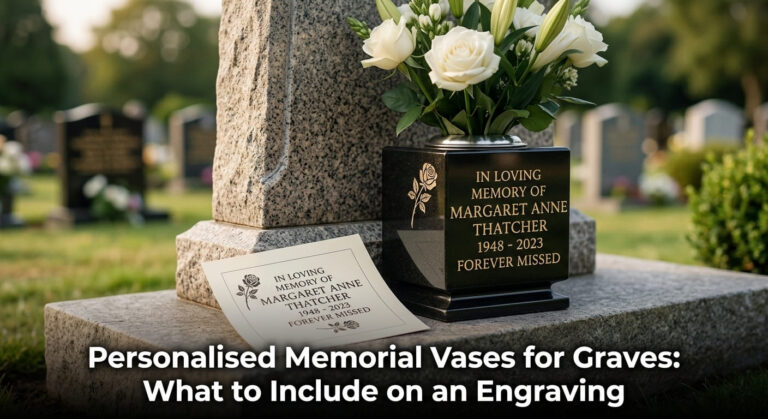
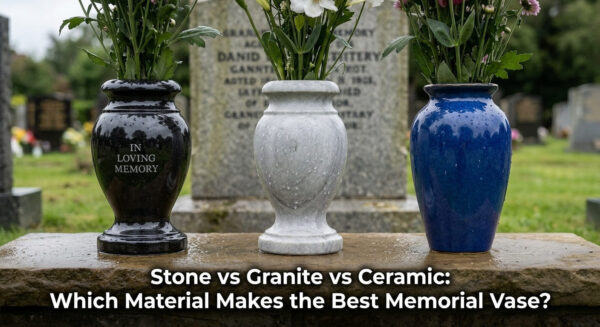
Choosing a material for a grave vase is a decision that will affect how a memorial looks, how it weathers, and how much maintenance it needs for years or even decades. In the UK, where rainfall is frequent, winters include frost cycles, and many cemeteries operate under material restrictions, the choice between stone, granite, and ceramic is far from interchangeable.
This guide gives every UK buyer the information needed to make a confident decision, covering the geology, the outdoor performance data, the maintenance requirements, and the cemetery regulations that apply to each material.
Why Material Choice Matters More Than Most People Expect
A memorial vase placed at a UK graveside faces conditions that would test any material: freeze-thaw cycles during winter, acid rain in urban and suburban cemeteries, sustained UV exposure, wind, and the biological growth of lichen, algae, and moss over time. Not every material responds to these conditions equally.
The two most commonly misunderstood risks are porosity and acid sensitivity. Porous materials absorb water. When that water freezes during a frost cycle, it expands by approximately 9%, a force strong enough to crack stone from the inside. Acid rain, which carries a pH below 5.6 in many UK urban environments due to dissolved atmospheric pollutants, reacts chemically with certain stone compositions and gradually erodes the surface. Understanding which materials are vulnerable to each risk is the foundation of this comparison.
Granite: The Performance Benchmark
Granite is the most widely specified material for stone memorial vases for graves in the UK, and this is not simply a matter of tradition. It is a matter of geology.
Granite is an igneous rock, formed when magma cools slowly under immense pressure deep within the Earth’s crust. This process creates an interlocked crystalline structure that rates 6–7 on the Mohs hardness scale, making it one of the hardest commonly available natural stones. In practical terms for cemetery use, this hardness translates into several specific advantages.
Polished granite has near-zero surface porosity. Water cannot penetrate the polished surface, which means freeze-thaw cycles do not cause internal cracking. It also means biological growth, lichen, algae, moss, finds far less foothold on polished granite than on softer or more porous stones. Granite does not react to acid rain. Unlike calcium carbonate-based stones, granite’s mineral composition (predominantly quartz, feldspar, and mica) is chemically inert to the mild carbonic acid formed from atmospheric carbon dioxide in rainwater.
The result is a material that genuinely requires very little maintenance. An annual clean with warm water and a non-ionic soap restores polished black granite or polished grey granite to its original appearance, removing hard water deposits and surface soiling without any risk of chemical damage. Harsh chemicals, bleach, ammonia, vinegar, should be avoided even on granite, as these can damage enamel lettering infill over time.
In terms of outdoor longevity, a well-maintained polished granite grave vase in UK conditions should retain its appearance essentially unchanged for several decades, and structurally for considerably longer. Granite’s colour range, from classic Shanxi Black and polished grey through to Balmoral Red and Bahama Blue, also makes it uniquely suited to matching existing headstone material, creating a coherent, purposeful memorial rather than mismatched components.
Granite verdict: The strongest all-round performer for a stone custom memorial vase for a grave in UK outdoor conditions. Universally accepted by UK cemeteries and churchyards. The benchmark against which all other materials should be measured.
Marble: Elegance With Important Caveats
Marble is a metamorphic rock, formed when limestone is subjected to high heat and pressure over time. Its distinctive veined appearance, mirror-like polish, and warmer tonal range make it visually distinctive in a way that polished granite cannot fully replicate. For families whose existing headstone features marble, or who prioritise aesthetic softness over raw durability, marble has clear appeal.
Its outdoor performance, however, carries a significant limitation. Marble is composed primarily of calcium carbonate, which reacts with carbonic acid, the same mild acid found in all UK rainwater and at more concentrated levels in acid rain. This reaction gradually softens the stone surface, dulling the polish and, over time, eroding inscriptions until they become difficult to read. In sheltered churchyards and protected cemetery settings, this process is slow. In exposed or urban plots, it is considerably faster.
Marble rates approximately 3–5 on the Mohs hardness scale, softer than granite, and more vulnerable to surface scratching, nicking, and chipping from physical contact. It also has higher porosity than polished granite, making periodic sealing necessary to extend its outdoor lifespan. Most stonemasons recommend resealing outdoor marble memorial pieces every one to two years.
None of this makes marble a poor choice for every situation. In a sheltered churchyard or garden of remembrance, a marble grave vase can remain dignified and beautiful for decades with appropriate care. The consideration is honest: marble asks more of the buyer in exchange for its distinctive appearance.
Marble verdict: A genuinely beautiful material for a grave vase, but one that requires periodic maintenance and performs best in sheltered locations. Less suitable than granite for exposed UK cemetery plots without regular sealing and cleaning.
Cast Stone: Natural Appearance, Elevated Risk
Cast stone, sometimes marketed simply as “stone”, is a manufactured material made from compressed fine aggregates (typically sand, crushed stone, or cement) moulded into shape. It is distinct from natural stone and from granite. A cast stone memorial vase is handcrafted in appearance and often carries a texture and weight that can rival natural quarried stone at a lower price point.
Its outdoor performance is where the trade-off becomes clear. Cast stone is a porous material. In UK winters, water absorbed into the body of the vase freezes and expands, creating internal stress that can cause surface spalling, hairline cracking, and ultimately structural failure over repeated freeze-thaw cycles. This is not a theoretical risk, it is the primary reason that many cemetery regulations specifically prohibit porous cast stone or concrete from permanent grave decorations.
Where cast stone works well is in sheltered outdoor settings, a garden of remembrance, an indoor memorial space, or a protected plot where frost exposure is limited. For exposed UK cemetery plots in Scotland, the North of England, or anywhere with reliable winter frosts, cast stone is a risky investment regardless of its initial appeal.
Cast stone verdict: Attractive and affordable, but carries meaningful frost damage risk in UK outdoor cemetery conditions. Verify cemetery regulations before purchase, and use only in sheltered settings for outdoor applications.
Ceramic: Colour Versatility, Significant Outdoor Limitations
Ceramic memorial vases are made from fired clay, shaped, glazed, and kiln-fired to create a smooth, often colourful surface. Their design versatility is genuinely distinctive: ceramic vases come in a far wider range of colours, shapes, and decorative designs than natural stone allows, and they can be personalised with photographic imagery and intricate glazed patterns.
The outdoor performance of ceramic in a UK cemetery context is, however, consistently the weakest among the options reviewed here.
Ceramic’s primary failure mode in outdoor UK conditions is thermal shock cracking. When water penetrates the glaze and enters the body of the ceramic, then freezes during a frost, the thermal expansion cracks the material from within. This risk applies to standard ceramic even when the glaze appears intact, because micro-fissures in fired clay surfaces allow water ingress over time.
Beyond the physical frost damage risk, there is a specific UK regulatory dimension that most buyers are unaware of: many UK churchyards explicitly prohibit ceramic grave vases and painted colours on memorial items. This restriction, maintained by the Church of England and many parish councils managing traditional churchyards, is not always published online, and families who purchase a ceramic vase without checking first may arrive at the graveside to find it cannot be placed or has been removed by groundskeepers. In municipal cemeteries, regulation is generally less strict, but checking with your specific burial authority before purchasing a ceramic memorial vase is always essential.
Resin memorial vases, sometimes grouped with ceramic, offer better frost resistance and are lighter, making them easier to transport. UV-stabilised outdoor-grade resin resists colour fading and does not crack during freeze-thaw cycles, though its lifespan at around four to six years for quality products does not approach that of natural stone.
Ceramic verdict: Best suited to indoor memorials, sheltered garden settings, and short-term graveside displays. Not recommended for permanent outdoor UK cemetery use, particularly in churchyards. Always verify local regulations before purchasing.
Full Material Comparison: Key Attributes at a Glance
| Material | Mohs hardness | Freeze-thaw resistance | Acid rain resistance | Maintenance | Typical outdoor lifespan UK |
| Granite (polished) | 6–7 | Excellent | Excellent | Minimal | Decades–centuries |
| Marble (polished) | 3–5 | Moderate | Poor | Regular sealing | 10–30 years with care |
| Limestone | 3–4 | Moderate | Poor | Regular | 10–20 years |
| Welsh slate | 5–6 | Good | Good | Low | 20–50 years |
| Sandstone | 2–3 | Poor | Poor | High | 5–15 years |
| Cast stone | Variable | Poor | Moderate | Moderate | 5–15 years |
| Ceramic | Variable | Poor | Good | Low (if intact) | 2–5 years outdoor |
| Resin (UV grade) | N/A | Good | Good | Low | 4–6 years |
Which Material Should You Choose?
The decision depends on four factors: the cemetery’s regulations, how exposed the plot is, how frequently you can visit, and whether permanent or replaceable is preferred.
For a permanent outdoor stone memorial vase for a grave in a UK cemetery or churchyard, polished granite is the clear choice for the overwhelming majority of situations. Its combination of hardness, zero acid reactivity, freeze-thaw resistance, and near-zero maintenance makes it the only material that performs confidently across all UK outdoor cemetery conditions. Welsh slate is a strong second for buyers who prefer a more traditional, darker natural texture and do not need to match an existing granite headstone.
For families who prefer the aesthetic of marble or limestone, these are genuinely beautiful materials, but they are better suited to sheltered settings and require acceptance of a periodic maintenance commitment that granite does not.
Ceramic and cast stone are best understood as appropriate for indoor memorial gardens, temporary graveside displays, or sheltered outdoor positions where the specific frost and acid risks do not apply.
At Signs and Memorials, the grave vase range includes stone memorial vases across the full material spectrum described in this guide, with expert guidance on which option is appropriate for your cemetery’s specific regulations and outdoor exposure. Browse the collection or contact the team directly at signsandmemorials.co.uk to discuss your specific requirements.
Frequently Asked Questions
Q1. What is the best material for a memorial vase for a grave UK?
Polished granite is the best material for a stone memorial vase for a grave in UK outdoor conditions. With a Mohs hardness of 6–7, zero acid rain reactivity, and excellent freeze-thaw resistance, it outlasts all alternatives with minimal maintenance. Signs and Memorials offers granite grave vases across all finishes and colours.
Q2. Does a ceramic crack in a UK cemetery in winter?
Yes. Ceramic memorial vases are vulnerable to frost cracking in UK outdoor conditions. Water penetrates the glaze through micro-fissures, then freezes and expands during winter frost cycles, cracking the material from within. Ceramic is more suitable for sheltered indoor memorials or garden settings than for exposed outdoor UK cemeteries.
Q3. Are ceramic grave vases allowed in UK churchyards?
Many UK churchyards prohibit ceramic grave vases. Church of England guidelines and parish council rules frequently ban painted colours and ceramic materials from memorial plots. Always check with the specific burial authority before purchasing a ceramic vase for a churchyard setting. Granite and natural stone are universally accepted.
Q4. How long does a granite grave vase last outdoors in the UK?
A polished granite grave vase typically lasts several decades in UK outdoor conditions, and structurally for much longer. Granite’s igneous composition resists acid rain, freeze-thaw damage, UV exposure, and biological growth. Minimal maintenance, an annual clean with non-ionic soap and water, keeps polished granite looking its original condition.
Q5. Is marble a good material for an outdoor grave vase UK?
Marble is visually distinctive but less suited than granite for outdoor UK cemetery plots. Its calcium carbonate composition reacts with acid rain, gradually dulling the surface and eroding inscriptions. In sheltered churchyards with regular sealing, marble can perform well. For exposed plots, polished granite outperforms marble in long-term outdoor durability.
Q6. What is cast stone and is it suitable for a grave vase UK?
Cast stone is a manufactured aggregate material, not quarried natural stone. It is more porous than granite or marble, making it vulnerable to frost damage in UK winter conditions. Cast stone grave vases are better suited to sheltered outdoor settings or indoor memorials than to exposed UK cemetery plots subject to freeze-thaw cycles.
Q7. What is the difference between stone and granite for a memorial vase?
Granite is a specific type of natural igneous stone. “Stone” is a broader category that includes marble, limestone, sandstone, slate, and cast stone aggregates. For a grave vase UK, polished granite offers the best combination of hardness, acid resistance, and freeze-thaw resilience among all stone types, making it the specialist choice over generic stone alternatives.